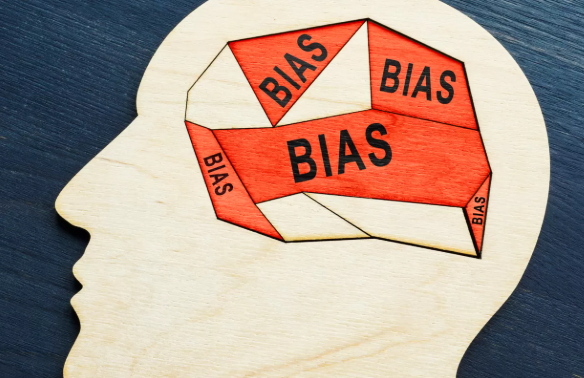
You can be completely convinced you’re being rational while quietly collecting evidence for a conclusion you already reached.
That is the uncomfortable part of confirmation bias. It usually does not feel like lying to yourself. It feels like research. You read the article that supports your position, remember the argument that landed, notice the prediction that came true, and dismiss the awkward evidence as an exception.
The danger is not that humans have opinions. The danger is that once an opinion becomes part of our mental furniture, we often start arranging the room around it.
What confirmation bias actually is
Confirmation bias is the tendency to favor information that supports what we already believe, while giving less attention, weight, or memory to information that challenges it.
That definition sounds simple, but the mechanism is more interesting than the label.
Confirmation bias can affect several stages of thinking:
- What we look for: We search for evidence that could confirm our hypothesis.
- What we notice: Supporting information catches our attention more easily.
- How we interpret it: Ambiguous evidence gets interpreted in ways that fit our expectations.
- What we remember: Supporting examples are often easier to retrieve later.
- How we explain failures: We invent reasons why contradictory evidence “doesn't really count.”
This means confirmation bias is not just a problem of bad information. It can operate even when the information itself is accurate.
Confirmation bias becomes especially dangerous when we're already overconfident in our understanding, which is one reason the Dunning-Kruger effect is so often misunderstood.
Suppose you believe a new programming language is overhyped. You read five reviews. Two criticize it, two praise it, and one is mixed. You may walk away thinking, “Everyone is realizing this thing is overrated.”
Nothing in that sentence requires fabricated evidence. The distortion happened in the selection and weighting of evidence.
A useful distinction: confirmation bias is less about believing false things than about being unfair to evidence.
Why smart people are not immune
It is tempting to treat confirmation bias as something that happens to gullible people.
That is backwards.
Intelligence can sometimes make the problem harder to detect because a capable person may be better at constructing explanations for a conclusion they already prefer. The issue is not whether you can produce a plausible argument. You probably can. The question is whether you would have produced the same argument if the evidence pointed the other way.
This matters in technical and professional settings.
A developer convinced that a system is suffering from a database bottleneck may inspect database metrics first. A founder convinced that users hate a particular feature may pay close attention to complaints about it. A manager who already distrusts an employee may interpret a late report as evidence of unreliability rather than an isolated mistake.
In each case, the person may be doing something that looks perfectly sensible: investigating the problem.
The hidden problem is that the investigation itself has been shaped by the hypothesis.
That is one of the less obvious features of confirmation bias. It can influence not only the answer, but the questions we decide to ask.
Confirmation bias in everyday life
Consider a simple example.
You think your coworker doesn't respect you. During a meeting, they interrupt you twice.
There it is.
But then you remember that they also interrupted two other people. They later asked for your opinion and used your suggestion. Those details receive less psychological weight because they do not fit the existing story.
Now imagine the opposite belief: you think the coworker is supportive. The same interruption may be interpreted as enthusiasm, impatience with the meeting, or simple conversational habit.
The event did not change. The interpretation did.
This is why arguments about “what happened” can become surprisingly difficult. People are not necessarily disagreeing about the raw facts. They may be assigning different meanings and importance to the same facts.
Where it commonly appears
Confirmation bias shows up wherever people have something at stake:
- Politics: We consume sources that reinforce our political identity.
- Investing: A favorite stock's good news feels more significant than its deteriorating fundamentals.
- Relationships: Once we decide someone is selfish, ordinary mistakes become evidence.
- Work: Managers can selectively notice behavior that confirms their impression of an employee.
- Health: People can interpret vague symptoms according to whatever diagnosis they already fear or expect.
- Technology: Engineers can become attached to a preferred architecture and unconsciously search for reasons to defend it.
- Online discussions: We remember the ridiculous argument from the opposing side and the reasonable argument from ours.
The pattern is remarkably portable.
The most dangerous form is not obvious bias
Confirmation bias is easiest to spot when someone refuses to acknowledge an obvious counterexample.
But the subtler version is more important: unequal standards of proof.
Imagine two people evaluating a claim.
For evidence supporting the claim, Person A says:
“That makes sense. It's another piece of evidence.”
For evidence against it:
“That's interesting, but there could be other explanations.”
Neither response is unreasonable on its own. The problem appears when the same standard is not applied in both directions.
A useful test is to reverse the positions.
If the evidence came from the opposing side, would you still consider it convincing?
If a competitor had done exactly what your company just did, would you interpret it as generously?
If someone you dislike made the argument you're currently making, would you find it as persuasive?
These questions are uncomfortable because they remove one of the easiest advantages we give ourselves: interpretive charity.
We tend to be generous with our own side and forensic with everyone else's.
A practical way to fight confirmation bias
You probably cannot eliminate confirmation bias. Trying to become perfectly unbiased is also a poor goal. Human reasoning does not work that way.
A useful antidote is to deliberately question the assumptions behind your conclusions, which is the foundation of first principles thinking.
A better goal is to build friction into important decisions.
1. Write down your hypothesis first
Before looking for evidence, state what you currently believe.
For example:
“I think the drop in conversions is primarily caused by the new checkout flow.”
Then write down what would change your mind.
This matters because otherwise the hypothesis can quietly move as evidence arrives. If the numbers contradict your original theory, you may unconsciously redefine the theory instead of abandoning it.
2. Search for disconfirming evidence
Don't merely ask:
“What supports this?”
Ask:
“What would I expect to see if this were wrong?”
That second question is much more productive.
If you believe a product feature is unpopular, look for users who repeatedly use it. If you think performance problems come from the database, investigate components that could produce the same symptoms.
You are not trying to “prove yourself wrong.” You are trying to discover whether your confidence deserves to survive contact with reality.
3. Separate evidence from interpretation
A useful mini-framework is:
| Layer | Example |
|---|---|
| Observation | Conversion fell 12% after the release |
| Interpretation | The new checkout caused the decline |
| Hypothesis | Checkout friction is the main driver |
| Alternative | Traffic quality changed at the same time |
The first statement is relatively concrete. The others contain increasingly more inference.
People often argue about the interpretation while forgetting to inspect the observation underneath it.
4. Use prediction instead of explanation
Explanations are cheap because almost anything can be explained after the fact.
Predictions are harder.
If you believe a particular cause is responsible for an outcome, ask what else you should observe if that explanation is correct.
For example:
textHypothesis:
The checkout redesign is hurting mobile conversions.

Prediction:
The decline should be substantially larger on mobile than desktop.

Test:
Compare conversion changes by device before changing anything else.
This approach turns a comfortable story into something testable.
5. Give opposing evidence a fair hearing
You don't need to treat every counterargument as equally valid. That's another mistake.
Open-mindedness does not mean pretending strong and weak evidence deserve identical weight.
It means applying roughly the same standards to evidence regardless of whether you like its conclusion.
That distinction is crucial.
Confirmation bias versus changing your mind
There is also a misconception worth correcting: avoiding confirmation bias does not mean constantly changing your mind.
Sometimes your original belief really is correct.
If you investigate a hypothesis and repeatedly find evidence supporting it while credible alternatives fail, becoming more confident is rational.
The goal is not neutrality for its own sake. The goal is calibration.
You want confidence to move with evidence.
Too little confidence produces indecision. Too much produces stubbornness. The sweet spot is being able to say, “This is what I currently believe, this is why, and here is the evidence that would make me reconsider.”
That last part is especially valuable.
A strong belief should have an exit condition.
Without one, a belief can become unfalsifiable. Every contradiction gets absorbed into the story, and eventually the story becomes impossible to lose.
The deeper lesson
Confirmation bias is often described as a flaw in individual reasoning, but there is a broader lesson hiding underneath it.
We don't simply interpret evidence; our existing models help determine which evidence feels important in the first place.
That means better thinking is not achieved merely by collecting more information. Sometimes more information makes things worse because it gives us a larger pile of material with which to defend what we already believe.
The better habit is more demanding: deliberately expose your conclusions to evidence that could hurt them.
That is useful in debugging, investing, management, research, relationships, and ordinary arguments. Not because skepticism makes you smarter, but because reality has no obligation to agree with the story you started with.
The most reliable thinkers are not people who never make up their minds.
They are people who can make up their minds without becoming prisoners of the first explanation that felt right.