You decide to exercise every morning.
Monday goes well. Tuesday is fine. Wednesday gets busy. By Friday, the workout has quietly become something you “should probably get back to.”
This is usually described as a discipline problem. It often isn't.
The harder truth is that good intentions are cheap, while habits have to survive ordinary life. A habit has to compete with tiredness, convenience, distractions, changing schedules, immediate rewards, and the simple fact that your brain already has thousands of well-practiced ways to behave.
That is why knowing what you should do is such a poor predictor of what you actually do.
Habits are not just repeated actions
A habit is often explained as something you do repeatedly until it becomes automatic. This is why consistency beats talent in many areas. That's useful, but incomplete.
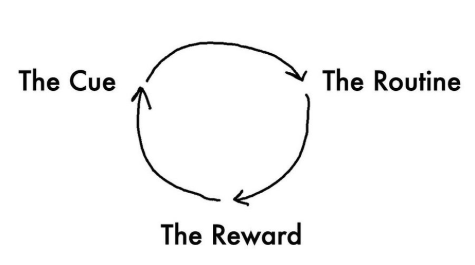
What makes a habit durable is the relationship between a cue, a behavior, and its consequences.
You wake up and see your phone. You check it. You get something interesting in return: messages, news, novelty, maybe a little anxiety. The behavior gets reinforced.
Now compare that with meditation.
You wake up, sit quietly for ten minutes, and... nothing particularly exciting happens.
The long-term benefit may be meaningful, but the immediate reward is weak. Your phone wins the local competition.
This points to one of the biggest reasons habits are difficult:
The brain is often making a sensible short-term choice that happens to be bad for your long-term goals.
Understanding that changes how you approach behavior change.
Your brain prefers the familiar
The brain does not need to consciously deliberate over every repeated action. That would be exhausting.
Once a behavior becomes familiar, the surrounding cues can begin to trigger it with very little conscious thought. This is why you can take the same route home while barely remembering the journey, or unlock your phone before realizing you reached for it.
Automaticity is useful because it reduces mental effort.
But there is a catch: the same machinery that makes good habits effortless also makes bad habits stubborn.
If you always work from the couch while checking social media, the environment starts becoming part of the routine. Sitting down may cue distraction before you've consciously decided to do anything.
This is why motivation alone is such an unreliable strategy. You are trying to overpower an established pattern with a temporary feeling.
The established pattern has home-field advantage.
Motivation is a terrible foundation
Motivation feels powerful because it creates a sharp emotional moment.
You watch an inspiring video. Read a book. Get frustrated with yourself. Set a goal. Suddenly, tomorrow feels like the beginning of a new life.
Then tomorrow arrives.
You are tired.
The weather is bad. Work ran late. Someone needs something. The sofa looks unusually comfortable.
Motivation fluctuates because it is a state, not a system.
This does not mean motivation is useless. It is excellent for starting things. It is simply unreliable as the mechanism that keeps them going.
A more durable approach is to reduce the number of decisions required to perform the behavior.
Instead of:
“I should exercise more.”
Try:
“After I make coffee, I put on my running shoes.”
The second statement is less inspiring. It is also much more useful.
The hidden power of a small behavior
People often make habits unnecessarily difficult by defining success too aggressively.
If your plan is to read for an hour every night, missing an evening feels like failure. If the plan is to read two pages, beginning is almost trivial.
That does not mean two pages is the ultimate goal. It means starting becomes cheap.
Once you've begun, continuing is often easier.
This is one reason small habits can outperform ambitious routines. They reduce the psychological resistance between intention and action.
The first job of a habit is not to produce a spectacular result. It is to make repetition easy enough that repetition actually happens.
Environment beats willpower more often than people admit
Suppose you are trying to eat less junk food.
You can keep snacks on your desk and repeatedly tell yourself to exercise restraint.
Or you can stop putting the snacks on your desk.
The second approach is less heroic. It is also smarter.
Willpower requires repeated decisions. Environmental design changes the number of decisions you have to make.
The same principle works in both directions:
- Put your running shoes beside the door.
- Keep distracting apps off the home screen.
- Prepare tomorrow's lunch before going to bed.
- Keep a book where you normally reach for your phone.
- Make the desired behavior visible and the unwanted behavior inconvenient.
This is not about creating a perfectly controlled life. You can't remove every temptation.
The point is to stop making the desired behavior unnecessarily difficult. Over time, these small behavioral patterns can become a major part of the psychology of high performers.
Bad habits often have better rewards
Here is a less comfortable observation: many bad habits are genuinely good at rewarding you.
Social media gives novelty immediately. Junk food tastes good immediately. Avoiding a difficult task produces immediate relief.
Meanwhile, the benefits of exercise, studying, saving money, or learning a skill are delayed.
That creates an uneven contest.
| Behavior | Immediate reward | Delayed reward |
|---|---|---|
| Scrolling social media | High | Often negligible |
| Eating junk food | High | Often negative |
| Exercising | Often moderate or low | High |
| Studying | Usually low | Potentially high |
| Saving money | Low | High |
This is why simply knowing that something is “good for you” often doesn't change behavior.
Human beings don't make every decision by calculating lifetime outcomes. Immediate consequences matter enormously.
A practical response is to make good habits more satisfying where possible.
Listen to music while walking. Track your workouts. Make the healthy meal genuinely enjoyable. Pair a tedious routine with something you already like.
You are not tricking your brain. You're acknowledging how learning actually works.
Missing once is normal. The real problem is what happens next.
One missed workout is not particularly important.
Two missed workouts are also not catastrophic.
The danger is the story that follows:
“I've fallen off the routine, so I'll start again Monday.”
Now a small interruption has become a week.
This is where all-or-nothing thinking quietly sabotages habit formation. People assume consistency means never breaking the chain. Real life guarantees that chains will break.
A better definition of consistency is returning quickly.
If you miss one day, resume the next opportunity. Don't turn a deviation into an identity.
A useful rule is:
- Expect disruptions.
- Make the habit small enough to restart easily.
- Never use one missed day as evidence that the system doesn't work.
- Look for patterns if the same disruption keeps happening.
That last point matters. Repeated failure is not always a character flaw. Sometimes it is information.
If you repeatedly fail to exercise at 6 a.m., perhaps the problem is not your commitment. Perhaps 6 a.m. is simply a terrible time for you to exercise.
Habit building is partly an engineering problem
There is a useful way to think about behavior change: stop asking only what you want to do and start asking what makes the behavior happen.
For any habit, examine four things:
Cue
What reliably happens immediately before the behavior?
Friction
How difficult is it to start?
Reward
What do you get immediately afterward?
Context
Where and when does the behavior normally occur?
This turns vague self-improvement into something observable.
For example:
textGoal:
Write every morning.

Cue:
Finish coffee.

Friction:
Laptop already open, document already prepared.

Minimum action:
Write for five minutes.

Reward:
Coffee + music after starting.

Context:
Same desk, same time, most weekdays.
The important detail is not the five-minute target. It is the deliberate removal of obstacles between the cue and the behavior.
The habit should eventually need less attention
The strange thing about successful habit building is that it often becomes less interesting over time.
At first, you need reminders. Then you need routines. Eventually, the behavior simply becomes something you do.
That is the point.
You don't want to spend your life negotiating with yourself about whether to brush your teeth. You want certain useful behaviors to become ordinary enough that they require very little psychological debate.
And this reveals a more useful definition of discipline.
Discipline is not constantly forcing yourself to do difficult things. It is often arranging your life so that the right thing requires less force.
The goal is not to become a person who wins a daily battle against temptation.
It is to build a life in which fewer battles need to happen at all.
Habits become easier when the desired action is obvious, convenient, repeatable, and connected to something already happening. They become harder when every attempt depends on motivation, perfect circumstances, and a heroic amount of self-control.
Good habits rarely arrive through one dramatic decision.
They become part of your life through hundreds of remarkably undramatic repetitions.